A First Look Around a Waiting Room
A waiting room observation guide for noticing seating, sightlines, and visual cues, so you can read how a space supports different visitors.
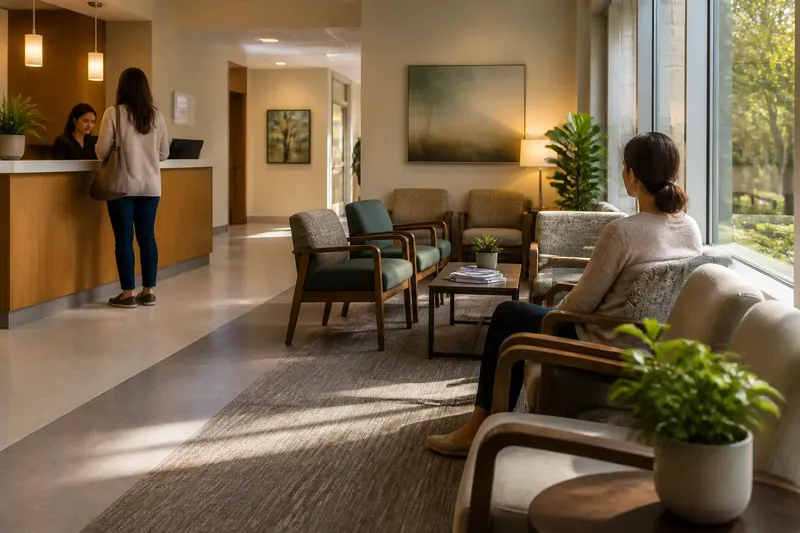
At the clinic door, one visitor pauses beside the check-in desk while another scans the chairs for a place near the window. A first look around a waiting room can reveal how its seating, sightlines, and visual cues shape these small decisions. Read the room as a set of invitations, not a puzzle with one correct arrangement.
What does the room ask you to notice first?
Stand where a visitor first enters and let your eyes travel without hurrying. Is the reception desk immediately apparent? Can you spot the place to check in, or does a sign compete with a framed poster, a television, and a row of notices? The first visual cue is often less about decoration than about orientation.
Notice what sits at eye level and what requires a deliberate search. A clear route from door to desk may help someone who is unfamiliar with the building. A large sign can still be hard to read if glare washes it out or if the lettering blends into a busy wall.
Try reading the room from the perspective of someone carrying a bag, using a cane, or keeping an eye on a child. The point is not to infer what every visitor needs; it is to notice whether the space offers more than one way to understand what happens next.
How does the seating offer different kinds of waiting?
Look at the chairs as a group before judging any one seat. Are they arranged in a line, around a shared table, or in small clusters? A straight row may make the route easy to read, while a cluster can create a more conversational feeling. Neither arrangement suits every person or every kind of visit.
Check for choices beyond the most visible seat. Some visitors may want to sit near an exit or reception desk; others may prefer a quieter edge, a place beside a companion, or a little space between strangers. Look for whether chairs face one another, turn toward a window, or point toward a screen. Each direction changes what a seated person is likely to see and how exposed they may feel.
Also notice the path between furniture. A chair can look available while its position makes entering or leaving awkward. A bag, stroller, or mobility aid may change how much clear floor a visitor needs. Observe whether there is room to approach and use a seat without treating one body or one route as the standard.
Say a waiting room has a tight row of chairs beside the check-in desk. Imagine staff shifting one chair to open the route and turning another toward a quieter corner. The expected observable result is a clearer passage and a choice between a more public and a more sheltered seat, though the room’s actual visitors may still prefer different arrangements.
What can someone see from a chair?
Choose several seats and check their sightlines from seated height. Can a visitor see the reception desk or an indicator for their turn without twisting around? Is the entrance in view? Does a television dominate the room, or can someone look away from it? These details affect how a person keeps track of the visit and where their attention rests.
Pay attention to what is visible to other people, too. A seat facing the desk may make it easy to ask a question, but it may also leave a visitor feeling on display. A chair angled toward a wall or window can offer more privacy, yet make the arrival of staff harder to notice. A useful room may provide both, rather than assuming everyone wants the same degree of contact.
Windows and partitions can create layered views. A low divider may separate a quiet corner without hiding the front desk; a tall partition can create privacy while making directions less obvious. Notice what each barrier hides as well as what it softens.
How do visual cues help people make their next choice?
Signs, floor transitions, lighting, and furniture placement all act as cues. A path that stays visually open can suggest where to walk, while a change in flooring may mark a boundary between reception and seating. Look for cues that agree with one another: a sign pointing one way is less useful if the furniture seems to direct visitors elsewhere.
Watch how light falls across the room. Bright daylight can make a corner inviting, but reflected glare may obscure a sign or screen. A dim stretch may feel calm, yet leave a visitor unsure whether it is part of the public area. Look for legibility and comfort together rather than assuming brighter or quieter is always better.
Materials add their own signals. A hard, echoing floor can make voices seem more exposed; fabric-covered seating may visually soften a room. These are impressions to observe, not verdicts about quality. The same surface can feel welcoming to one visitor and difficult to maintain for another.
What questions help you read the room?
Where would a first-time visitor look for check-in?
Start at the entrance and follow the strongest visual cues toward the desk. If several signs or objects compete, note which one is easiest to recognize from the doorway.
Can visitors choose how close to sit to others?
Look for variation in seat spacing and orientation, not simply an empty chair. A choice may come from a single seat at the edge, a shared cluster, or room to leave a modest gap.
Can someone notice their turn without watching a screen?
Check whether the desk, a staff member, or another clear signal is visible from different seats. A screen may be helpful, but it should not be the only cue a visitor can perceive.
Is there a clear route through the seating area?
Trace the path from the entrance to reception and onward to the chairs. Notice where furniture, bags, or a narrow turn might interrupt it, without assuming one layout works for every visitor.
How can observations stay useful without becoming a verdict?
Write down what you can see before deciding what it means. “The desk is hidden from the corner seat” is an observation; “the room is confusing” is a broader judgment. Keeping those separate makes it easier to discuss a possible change without speaking for every person who waits there.
When considering an adjustment, connect it to a specific choice: clearer access to a sign, a more visible route, or a seat with a different view. Then ask who might benefit and who might lose a useful option. For permanent changes or accessibility questions, consult a qualified design professional and follow applicable local requirements.
A first look around a waiting room is most useful when it leaves room for more than one experience. Notice the doorway, the available seats, and what each seat lets a visitor see; then treat those observations as questions for the people who use the space. The small details worth keeping are often the choices a visitor can make without having to ask.